
Newton County Tentative Release Dates
Mississippi Department of Corrections uses the exact public label Tentative Release Date. It is not labeled guaranteed, scheduled, or projected in the MDOC offender detail. “Projected release date” is a common search phrase, but the official field name matters because “tentative” signals that the date can change. Read it with the person’s Location, Unit, Entry Date, offenses, sentence length, County of Conviction, and other sentence fields.
The actual release date is when the person leaves the relevant custody. Final discharge is later in some cases. Parole or earned-release supervision may place a person in the community while the sentence and MDOC jurisdiction continue. A county jail Bookout Date/time proves departure from Newton County Jail, yet the disposition or receiving agency is still needed to tell release into the community from transfer.
Tentative versus actual: MDOC’s Tentative Release Date is a computed estimate. Verify departure through the custodian and final discharge through the formal release record.
- Tentative Release Date
- The exact estimate displayed by MDOC for a state correctional record.
- Parole eligibility
- The earliest statutory point for possible Board consideration, not a release promise.
- ERS
- Earned-release supervision, with community placement under continuing MDOC jurisdiction.
- Detainer
- A hold or request from another authority that may redirect or delay release.
- Discharge
- The formal end of the sentence and related custody authority.
Find Newton County Release Date Records
Start with where the person is held and whether a sentence exists. For a Newton County defendant who entered state custody, use the MDOC offender search. For a county-only jail sentence, no equivalent public Newton calculator or date feed was found. Ask the Sheriff and sentencing court for the existing computation, sentence order, credits, and bookout record.
- Determine whether the person is pretrial, serving a county sentence, or in MDOC custody. Do not apply a prison formula to an unsentenced booking.
- For MDOC, search by MDOC ID when known, or use the name fields and compare identity, offense, and conviction county.
- Open the correct detail and read Location and Unit before the Tentative Release Date. A community unit and secure prison location mean different things.
- Compare Entry Date, sentence length, each offense, sentence date, and County of Conviction. Multiple cases may interact.
- For Newton County Jail, request the existing time computation and credit record from the Sheriff, then compare it with the sentencing judgment.
- Confirm actual departure with the jail bookout, MDOC discharge process, or other holding custodian. Check for another agency’s hold.
The official detail view below shows MDOC’s precise Tentative Release Date wording in context. It also illustrates why the date should not be read without the sentence and location fields around it.
View the MDOC source with the Tentative Release Date field.
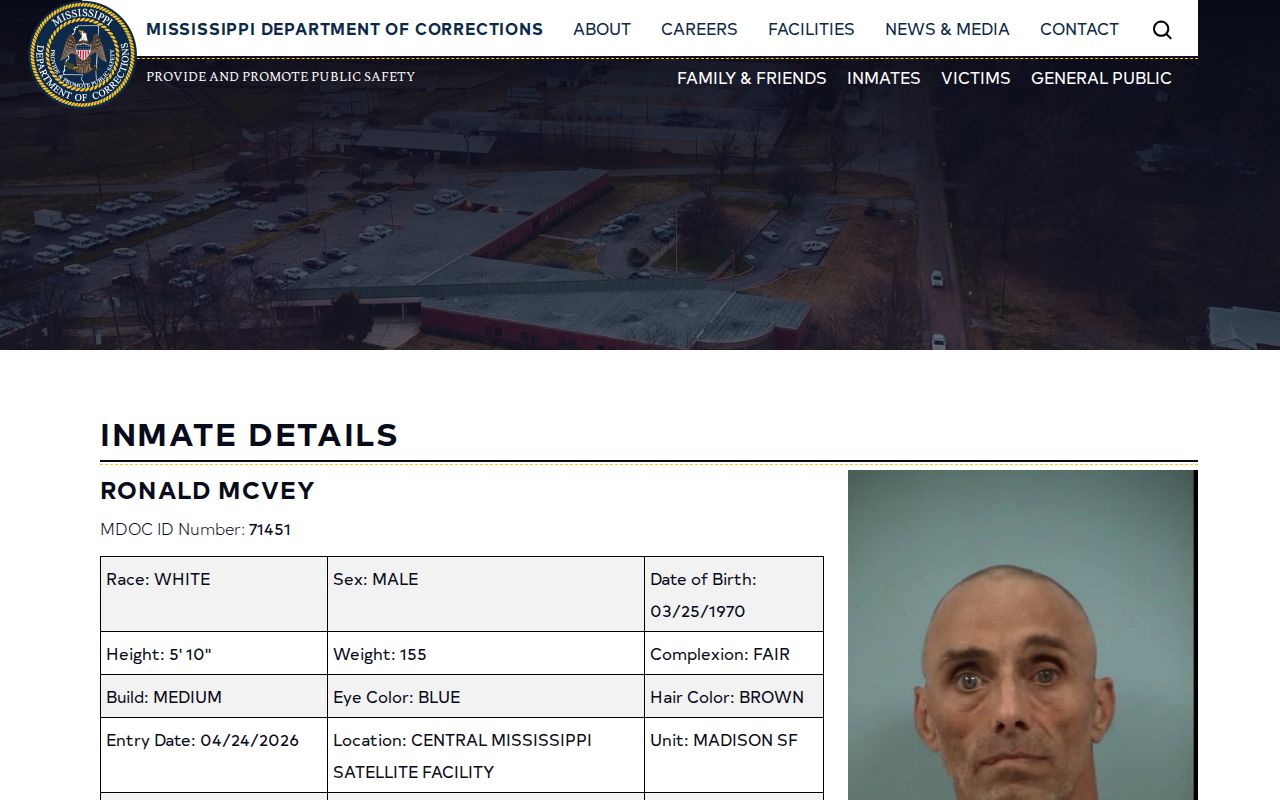
The field supplies an estimate for an MDOC record, not a guaranteed Newton County release or certified discharge.
Note: “Newton” in County of Conviction ties a sentence to the county case; it does not mean the person is housed in Newton County.
Newton County Jail Release Dates
A pretrial Newton County Jail detainee generally has no sentence-derived Tentative Release Date. Departure depends on bond, a court order, dismissal or other case disposition, and any unrelated hold. A bond order permits release after its conditions are met, but the Sheriff’s Bookout Date/time proves when the person actually left. Another detainer can shift the destination even after a judge acts.
For someone serving a county-only sentence, contact the Newton County Sheriff at 300 Access Road, Decatur, MS 39327, 601-635-4401. Ask for the existing jail time computation, credit entries, sentence basis, Bookout Date/time when completed, release disposition, and receiving agency if any. The research found no posted county good-time policy, weekend-release rule, public release-day schedule, or online calculator. Those details must not be supplied by guesswork.
Use the court named in the booking or jail record. Newton County Justice Court handles county misdemeanors and bond or preliminary felony matters. Circuit Court holds felony matters in its jurisdiction, and municipal cases may remain with the named municipal court. A judgment or amended order explains the legal sentence. The jail record shows how it was applied to physical custody.
The official Newton County courts page helps identify the right tribunal. Pair the order with the exact custody episode instead of subtracting a term from a booking date.
Newton County MDOC Date Computation
MDOC’s handbook says the agency calculates parole, earned-release supervision, tentative release or discharge, and maximum release dates. Eligible presentence time spent in county jail is credited when the sentence-begin date is established. That is one major reason a simple sentence-length subtraction can be wrong. The judgment date, MDOC Entry Date, and computed sentence-begin date may not be the same.
Concurrent sentences run at the same time to the extent the judgment allows. Consecutive sentences run one after another. Multiple cases, amended judgments, offense dates, statutory exclusions, disciplinary credits, and holds can affect the computation. MDOC also says exact release information is supplied to the inmate by the case manager and that release processing can take 30 to 45 days. A discharge certificate must be received before release.
The MDOC supervision explanation documents the state framework. Its screenshot below provides the researched calculation and ERS context used for Newton County date questions.

The state explanation shows why a computed release point, community supervision, and final discharge must remain separate.
For time, jail credit, and eligibility questions, contact MDOC Records at P.O. Box 24388, Jackson, MS 39225; 601-933-2889; MDOCRecordsDepartment@mdoc.state.ms.us. Supply the MDOC ID and request the existing time computation or release record.
Newton County Earned-Time Release Rules
For qualifying sentences imposed after June 30, 1995, Miss. Code §47-5-138(5) permits eligible inmates to earn 4.5 days for each 30 days served for good conduct and performance. The credit is capped at 15 percent of the sentence and remains subject to statutory qualifications. This is the source of the often shortened “85 percent” description.
The shorthand is not a promise that every person leaves secure custody at exactly 85 percent. Eligibility exclusions, conduct, classification, sentence structure, offense date, and an approved release plan can matter. Subsection (6) places the early portion on earned-release supervision until sentence expiration. During ERS, the person retains inmate status and remains under MDOC jurisdiction.
Older sentences can follow different rules. Nor should the 15 percent cap be applied to an unsentenced Newton jail detainee. A pretrial release turns on bond, court action, and holds, not MDOC earned time. County-only credit should come from the actual Newton jail and court computation because no published local formula was found.
Good-time note: The calculation is 4.5 days per 30 days served, capped at 15 percent for eligible sentences, not a blanket release guarantee.
Newton County Parole Eligibility Dates
Parole eligibility is a separate legal calculation under Miss. Code §47-7-3. Earned or good time does not reduce the service required to reach parole eligibility. Eligibility marks a possible point for Board consideration. It does not show that the Mississippi State Parole Board granted parole or set an actual release.
The current broad categories described in the research include nonviolent cases at 25 percent or ten years, whichever is less; violent offenses under the cited definition generally at 50 percent or twenty years, whichever is less; armed robbery, drive-by shooting, and carjacking at 60 percent or twenty-five years, whichever is less; and specified nonviolent, nonhabitual drug offenses at 25 percent or ten years, whichever is less. Extensive exclusions apply to listed habitual, sex, murder or life, trafficking, and no-parole offenses.
Offense date and current law matter. The cited statute carries a July 1, 2027 repeal notation, so its official text must be checked for later publication or a future case analysis. A tentative hearing date is not a grant. Board denial or deferral, residence-plan review, or another custody duty can separate parole eligibility from actual exit.
The distinction is crucial: earned time affects MDOC’s sentence computation, parole eligibility affects when Board consideration may begin, and a parole grant affects community release under supervision. None alone establishes final discharge.
Note: The Board alone grants, denies, or revokes parole; a website date or eligibility fraction cannot decide the outcome.
Why Newton County Release Dates Change
A displayed date can move because the inputs or legal status change. Some factors alter the sentence computation. Others change only the path from the institution to the next placement. Read the revised MDOC or court record rather than assuming that every movement reflects discipline or error.
| Factor | Possible effect | Best confirming source |
|---|---|---|
| Presentence jail credit | Changes the sentence-begin computation. | MDOC time record and court judgment |
| Concurrent or consecutive terms | Changes how multiple sentences run together. | Judgments and MDOC computation |
| Amended court order | Changes a sentence term, credit, or legal authority. | Sentencing court docket |
| Earned-time gain or loss | May change the tentative date within statutory limits. | MDOC case and time record |
| Detainer or other hold | Can redirect departure to another custodian. | Releasing and receiving agencies |
| Parole decision | Grant, denial, or deferral can change the expected path. | Mississippi State Parole Board |
| Residence plan or processing | May delay physical departure after an estimated date. | Case manager and MDOC |
A Newton County detainer example can show a local bookout while state custody continues. The Sheriff’s timestamp answers when the person left the county jail. MDOC or the receiving agency answers what happened next. Calling the local bookout a community release without checking the receiving agency would be unsupported.
Confirm Newton County Actual Release
For a county-jail departure, obtain the jail docket entry with Bookout Date/time, disposition, and receiving agency. For a state-prison departure, compare MDOC’s current location and time record, then seek the discharge certificate or confirmed release entry. For probation, parole, or ERS, remember that community status can continue after secure custody ends.
A pending alert through the Newton County VINE inmate check can help flag a reported release or transfer. Confirm the notice with the contributing agency. VINELink is a notification system, not a certified release instrument, and a missing result does not rule out an older booking or a transfer outside its current display.
The complete Newton County released-inmate record path also pairs court authority with the local bookout. That pairing is often the strongest answer: the order explains why departure was authorized, while the custody record shows when it occurred and whether another agency took custody.
Keep three dates distinct. The Tentative Release Date is MDOC’s estimate. The actual release date is the verified physical exit from a specific custodian. The discharge date marks the formal end of sentence authority. They can match, but Newton County and state records should not be forced to show the same date when the custody path says otherwise.